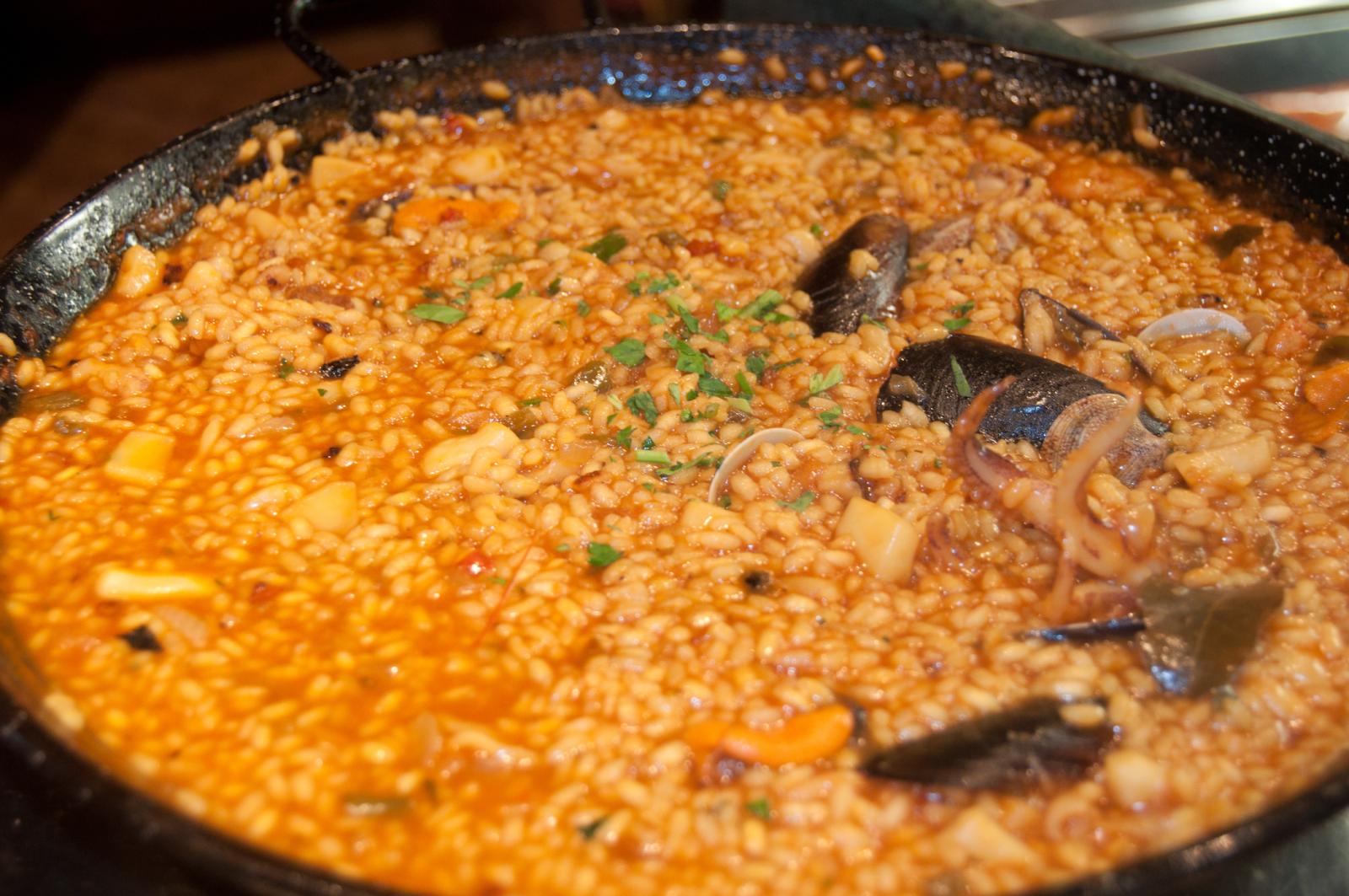
Paella emerged in the rural areas of Valencia between the 15th and 16th centuries, due to the need of peasants and shepherds for an easy meal to prepare and with the ingredients they had on hand in the field. In its origins the ingredients of the paella were, poultries, the field rabbit or hare, the fresh vegetables that were available, rice, saffron and olive oil that were mixed in the paella with the water.
It is possible that 'paella' is an Arabic word because rice was brought to Spain by the páramos (inhabitants of North Africa) in the 8th century.
Throughout the Iberian Peninsula there are numerous types of paellas. Among them, we highlight the following:
Valencian paella
The 10 ingredients that cannot be missed in the paella to be considered Valencian are: ferradura and garrafó (hives and green beans), tomato, rabbit, chicken, saffron, olive oil, water, salt and rice.
Seafood paella
It consists of rice served with different types of seafood: prawns, mussels, squid rings, etc. This dish is common in coastal areas, and it is recommended in summer with a glass of white wine.
Meat paella
It is a typical dish of Spanish families that is usually eaten on Sundays for lunch, in which the main accompaniment of rice is meat, either pork or calf or chicken thighs, seasoned with vegetables and a good amount of spices such as pepper or paprika.
Mixed paella
It is the union between the seafood paella and the meat one. It is the easiest to find in any restaurant in Spain and the one that is usually considered "paella".
Black rice
It is a type of seafood rice characterized by the ink that comes off the squid during its preparation and that stains the entire dish black.
Vegetarian paella
It is a combination of vegetables such as asparagus, artichokes or mushrooms with which you can prepare a delicious paella based on non-animal ingredients.